Last Updated on October 9, 2026 by Bakare Sherifdeen
Introduction
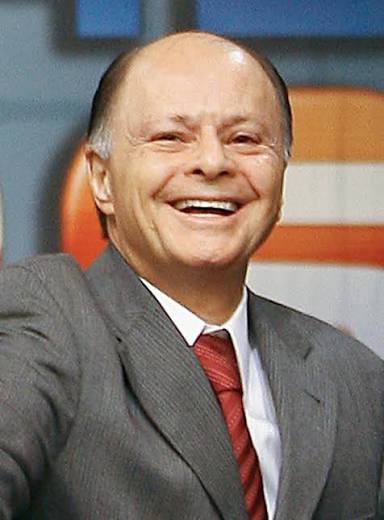
Edir Macedo is a Brazilian evangelical bishop, author, entrepreneur, and media executive best known as the founder of the Universal Church of the Kingdom of God (UCKG), one of the most internationally recognised religious movements to emerge from Brazil. Since establishing the church in 1977, Macedo has built a religious organisation with an international presence and developed a major media business associated with Record TV.
His journey from working in public service to leading a worldwide church movement has attracted millions of followers and made him an influential figure in Brazilian religious and public life. His ministry has also generated considerable debate, particularly over prosperity theology, religious fundraising, the relationship between religion and commercial media, and statements he has made about other groups.
Macedo’s story is therefore more than the biography of a church founder. It is also an account of how religious communication, television, publishing, and international expansion helped shape a powerful modern religious institution.
This Edir Macedo biography explores his childhood, education, conversion to evangelical Christianity, marriage, children, ministry, business interests, books, controversies, achievements, and estimated net worth.
Key Takeaways
- Edir Macedo was born on February 18, 1945, in Rio das Flores, Rio de Janeiro, Brazil.
- He founded the Universal Church of the Kingdom of God on July 9, 1977.
- Before entering full-time ministry, he worked in public service, including employment connected with the Rio de Janeiro state lottery and Brazil’s national statistics agency.
- He is married to Ester Bezerra, and they have two biological daughters, Cristiane and Viviane, and an adopted son, Moysés.
- Macedo is closely associated with Record TV, a major Brazilian television network.
- His books include the Nothing to Lose memoir series and Orixás, Caboclos e Guias: Deuses ou Demônios?
- His ministry has grown internationally but has also faced criticism and legal scrutiny.
- His estimated net worth is around $2 billion, although personal wealth estimates vary and should not be treated as a verified statement of his liquid assets.
Edir Macedo at a Glance
| Detail | Information |
|---|---|
| Full Name | Edir Macedo Bezerra |
| Known As | Bishop Edir Macedo |
| Date of Birth | February 18, 1945 |
| Age | 81 years (2026) |
| Place of Birth | Rio das Flores, Rio de Janeiro, Brazil |
| Nationality | Brazilian |
| Profession | Bishop, pastor, author, entrepreneur, media executive |
| Known For | Founding the Universal Church of the Kingdom of God |
| Church Founded | July 9, 1977 |
| Wife | Ester Bezerra |
| Children | Cristiane, Viviane, and Moysés |
| Education | Theological studies and qualifications reported by the Universal Church |
| Major Business Association | Record TV and Grupo Record |
| Estimated Net Worth | Around $2 billion |
| Main Language | Portuguese |
Early Life and Family Background
Edir Macedo Bezerra was born on February 18, 1945, in Rio das Flores, a municipality in the Brazilian state of Rio de Janeiro. He grew up in a large family and was one of the children of Henrique Bezerra and Eugênia de Macedo Bezerra, whom the family affectionately called Dona Geninha.
His childhood was shaped by the expectations and discipline of family life. Accounts published by the Universal Church describe a strict household and highlight his mother’s influence on the family. These early experiences later became part of the personal story Macedo shared in his autobiographical books.
Macedo was raised in a Catholic environment. However, his religious journey eventually took him beyond the tradition in which he grew up. His move toward evangelical Christianity would become a defining turning point, influencing his professional choices and ultimately leading to the creation of a church with an international reach.
His early years did not immediately suggest the scale of the organisation he would later establish. Before becoming a full-time religious leader, he pursued public-sector employment, gaining experience in structured workplaces and administrative responsibilities.
Education and Early Career
Before founding the Universal Church, Macedo worked in public service. His employment history included work with the Loteria do Estado do Rio de Janeiro, commonly known as Loterj, and Brazil’s national statistics agency, the Brazilian Institute of Geography and Statistics, or IBGE.
His work at IBGE included participation in economic census activities. These positions provided a measure of professional stability, but Macedo eventually decided to leave public service to dedicate himself to religious ministry.
The Universal Church’s biographical accounts state that he spent approximately 16 years in public service. Leaving a stable career for religious work represented a major personal and professional change, particularly because he had a family to support.
Macedo also pursued theological education. Church-published biographies list studies and qualifications in theology and Christian philosophy, including degrees associated with Brazilian theological institutions. Because educational credentials can be described differently across institutional biographies, readers should distinguish the church’s published account of his qualifications from independently verified academic records.
His formal and practical preparation contributed to the religious identity he developed as a preacher and church leader. Nevertheless, his eventual influence depended not only on theological training but also on his ability to organise congregations, communicate his message, and expand his ministry through media.
How Edir Macedo Became a Christian Minister
Macedo’s transition into evangelical ministry developed during the 1960s and 1970s. His religious experiences and involvement with evangelical and Pentecostal communities influenced his decision to dedicate his life to preaching.
He eventually began organising religious meetings and reaching people outside established church settings. Rather than starting with a large building or a substantial institutional structure, his early ministry relied on modest gatherings and direct preaching.
His later autobiographical accounts present this period as a time of personal conviction and difficult decisions. Macedo describes his ministry as a response to what he understood to be a divine calling.
As with many religious biographies, his account of that calling reflects his own interpretation of events. Its historical significance lies in how it motivated him to leave his previous career and establish an independent religious organisation.
Founding the Universal Church of the Kingdom of God
One of the most important events in Edir Macedo’s life occurred on July 9, 1977, when he founded the Universal Church of the Kingdom of God in Rio de Janeiro.
The church’s early meetings were modest. Its historical account describes Macedo preaching in a small pavilion in the Méier neighbourhood before the ministry established its first dedicated meeting place. The first church building was a former funeral parlour in the Abolição district of Rio de Janeiro.
This humble beginning became the starting point for an organisation that would later expand throughout Brazil and into other countries.
Macedo’s early preaching focused on Christian conversion, prayer, spiritual renewal, deliverance, and the belief that faith could change people’s lives. The church developed a recognisable approach that combined Pentecostal practices with an emphasis on personal transformation and practical concerns such as illness, family problems, unemployment, and financial hardship.
The Universal Church’s message appealed to many people seeking spiritual support and a sense of hope during difficult circumstances. Its use of accessible meeting spaces and direct communication also helped it reach audiences beyond traditional church settings.
The organisation expanded rapidly in Brazil. As congregations multiplied, it developed a more formal structure, trained leaders, established additional places of worship, and created systems for communicating with members across different regions.
Macedo became the movement’s central public figure, serving as its leading bishop and remaining closely associated with its identity and direction.
The Growth of the Universal Church Internationally
The expansion of the Universal Church became one of the defining features of Macedo’s ministry.
After establishing a strong presence in Brazil, the church began moving into other countries. It entered the United States in the 1980s and subsequently expanded into parts of Europe, Africa, Asia, and Latin America.
Its international growth relied on several methods, including opening congregations, training ministers, translating religious material, broadcasting services, and using media to reach people who might not attend a church building.
The church’s international presence has made it a significant example of a Brazilian-origin religious movement operating across national and cultural boundaries. Its size and reach are described differently across sources and may change over time, so claims about the precise number of countries, congregations, or members should be checked against current institutional figures.
The Universal Church also developed a distinctive organisational model. Rather than operating solely as a network of independent congregations, it maintained a central leadership structure and a consistent identity across its international work.
Macedo’s influence over this structure helped establish him as one of the most prominent religious leaders in Brazil. His ministry has also been closely connected to the country’s wider social and political environment, where evangelical organisations have become important participants in public debate.
Edir Macedo and Record TV
Macedo’s influence extends beyond religious ministry into television and media ownership.
In 1989, interests associated with Macedo acquired Record, a Brazilian television network that later became known as Record TV. The acquisition was a major turning point because it gave the media group associated with him a significant platform for broadcasting entertainment, news, and other programming.
Record TV developed into one of Brazil’s major television broadcasters. Its programming reaches audiences beyond the Universal Church, making it an important part of the wider Brazilian media industry.
The relationship between Macedo, the church, and Record TV has attracted public scrutiny. Critics have raised questions about the concentration of religious and media influence, the distinction between church resources and commercial business interests, and the role of television in promoting religious messages.
Macedo has also been described in financial reporting as a billionaire whose wealth is associated substantially with media assets. However, the church’s finances and the ownership of commercial assets should not automatically be treated as the same thing as his personal wealth. An organisation’s donations, operating revenue, assets, and an individual’s net worth are different financial categories.
His involvement in broadcasting nevertheless illustrates how media became central to his public influence. Television enabled him to reach a much larger audience than could be reached through local church meetings alone.
Edir Macedo’s Teaching and Ministry Style
Macedo’s ministry is commonly associated with Pentecostal and neo-Pentecostal Christianity. The Universal Church places considerable emphasis on prayer, faith, spiritual deliverance, healing, personal transformation, and overcoming difficulties.
One of the most debated aspects of its teaching is the relationship between faith and material well-being. The church has promoted teachings often discussed under the broader heading of prosperity theology, although interpretations of those teachings vary among observers and religious communities.
Supporters see the ministry as an opportunity to seek spiritual renewal, develop personal discipline, and confront problems through prayer and faith. They often credit the church with providing community, guidance, and a framework for rebuilding their lives.
Critics argue that some prosperity-oriented religious messages can place excessive emphasis on financial giving and may create unrealistic expectations about material success. Such criticism has contributed to continuing debates about religious fundraising, accountability, and the responsibilities of church leadership.
Understanding Macedo’s ministry requires recognising both its appeal to followers and the questions raised by its methods. Its growth demonstrates the effectiveness of its communication and organisational model, while the controversy surrounding it shows how religious influence can become entangled with financial and social concerns.
Edir Macedo’s Wife, Ester Bezerra
Edir Macedo married Ester Eunice Rangel, widely known as Ester Bezerra, on December 18, 1971.
Their marriage preceded the founding of the Universal Church and has remained an important part of Macedo’s personal story. Church-published accounts describe Ester as a key source of support during his transition from public service to ministry.
As Macedo’s religious work expanded, the couple’s family life developed alongside the demands of church leadership and international travel. Their marriage has also featured in his autobiographical writing, in which he discusses the personal experiences and family relationships that influenced his life.
Ester has maintained a public association with the Universal Church and is recognised as an important figure in the family’s religious life.
Edir Macedo’s Children
Edir Macedo and Ester Bezerra have two biological daughters, Cristiane and Viviane, and an adopted son, Moysés.
Cristiane Macedo
Cristiane is Macedo’s eldest daughter. Her life has been discussed in accounts of the family’s history and in the autobiographical material published by her father.
She has also been associated with the wider family and church environment in which Macedo built his ministry.
Viviane Macedo
Viviane is Macedo’s younger biological daughter. Church-published accounts describe her birth with a cleft lip and cleft palate as a deeply emotional event for her parents.
Macedo has presented this family experience as an important turning point in his personal religious journey. In his account, the experience strengthened his resolve to devote himself to preaching.
This story is part of the family’s published narrative and helps explain how personal circumstances became intertwined with his understanding of his calling.
Moysés Macedo
Moysés, also written as Moses in some English-language church materials, is the couple’s adopted son. The Universal Church’s biography describes his arrival into the family in 1985, when he was an infant.
The adoption became another important element in the family’s story. Together, the three children form part of the personal background often discussed in accounts of Macedo’s life and ministry.
Edir Macedo’s Books and Writing Career
Macedo has written extensively about Christian faith, spiritual life, personal experiences, and the beliefs of the Universal Church. His books have helped communicate his message beyond church services and television appearances.
Some of his best-known works include the following.
Nothing to Lose
The Nothing to Lose memoir series is among Macedo’s most widely recognised publishing projects. The books recount episodes from his personal life, the development of the Universal Church, and the challenges he says he faced during his ministry.
The series was developed with journalist Douglas Tavolaro and includes Macedo’s account of his arrest in 1992, the growth of his church, and the development of his media interests.
The books became major commercial publications in Brazil. Their popularity also demonstrated the public’s interest in Macedo’s personal account of the controversies and milestones surrounding his career.
Readers should remember that autobiographical books present events through the author’s perspective. They are valuable sources for understanding how Macedo describes his experiences, but they are not substitutes for independent reporting or court records when examining disputed events.
Orixás, Caboclos e Guias: Deuses ou Demônios?
This book, whose Portuguese title translates approximately as Orixás, Caboclos and Guides: Gods or Demons?, discusses Afro-Brazilian religious traditions and other spiritual practices from the perspective of the Universal Church.
The book became controversial because of its negative characterisation of religious figures and practices associated with traditions such as Umbanda and Candomblé. Critics argued that its language contributed to religious intolerance.
The dispute reflects a broader conflict in Brazil over religious freedom, prejudice, and the treatment of Afro-Brazilian faiths. The book is therefore significant not only as a publication by Macedo but also as part of the public debate surrounding his ministry.
Other Religious Writings
Macedo has published other works concerning faith, spiritual life, prayer, and Christian conduct. His writing generally reflects the theological priorities of the Universal Church and its emphasis on practical applications of belief.
His publishing career has strengthened his public profile by allowing readers to engage with his ideas outside church services and television broadcasts.
Edir Macedo’s Net Worth
Edir Macedo’s net worth is estimated to be around $2 billion. His wealth is widely associated with his media interests, particularly Record TV and businesses connected with the wider Grupo Record, alongside his publishing and other commercial activities.
Forbes Brazil’s 2025 billionaire ranking listed Macedo with an estimated fortune of approximately R$9.8 billion. Estimates can differ between publications and years because private business holdings, asset valuations, ownership arrangements, and exchange rates affect the calculations.
It is important to distinguish Macedo’s estimated personal wealth from the finances of the Universal Church. Church donations and institutional assets do not automatically constitute his personal income. His exact personal financial position is not fully available in public records, so the figure should be understood as an estimate rather than a verified accounting of all his assets.
Controversies and Legal Issues
Edir Macedo’s career has involved several public controversies and legal proceedings. These issues have influenced how his ministry is viewed by supporters, critics, journalists, and legal authorities.
The 1992 Arrest
In 1992, Macedo was arrested in Brazil amid accusations that included charlatanism and unlawful faith-healing practices. He spent 11 days in detention before being released.
The arrest became a defining episode in his public story. Macedo later discussed it in his memoirs, presenting it as a period of hardship and persecution. Reporting on the case has described the charges and the subsequent legal developments, including the eventual closure of the case.
The episode should be understood in its legal context: an arrest or accusation is not itself proof of guilt. His account of the experience and independent reporting offer different perspectives on an event that remains part of his public biography.
Financial Allegations and Investigations
Macedo and other figures associated with the Universal Church have faced scrutiny over financial matters. In 2009, prosecutors in São Paulo brought allegations involving money laundering and criminal association against Macedo and other individuals connected with the church.
The proceedings developed over time and were ultimately archived, according to reporting on the case. Other investigations and legal disputes have also arisen during his career.
These matters have contributed to public debate about transparency, financial oversight, and the relationship between religious institutions and commercial organisations. It is important to distinguish allegations, investigations, court decisions, and final outcomes rather than treating them as interchangeable.
Criticism of Religious Intolerance
Macedo’s statements and publications about other religious traditions have drawn criticism, especially where they characterise Afro-Brazilian religions in strongly negative terms.
Critics argue that such rhetoric can deepen prejudice against religious minorities. Supporters of the Universal Church have defended its right to express its religious beliefs, while opponents maintain that religious freedom should also protect people from discriminatory treatment.
The disagreement reflects wider tensions in Brazil, where religious diversity and freedom of belief coexist with disputes over public expression and intolerance.
2026 Court Ruling Concerning Homophobic Remarks
In September 2026, Brazilian reporting stated that a federal regional court ordered Macedo and Record TV to pay a total of R$1.5 million in collective moral damages over remarks made during a televised Christmas programme in 2022. The ruling treated the remarks as homophobic and held that they went beyond protected expression.
Reports also indicated that the defence disputed the ruling and that further legal challenges remained possible. The case should therefore be described according to its reported procedural status, rather than as though every avenue of appeal had necessarily been exhausted.
The dispute added to continuing debates about religious speech, LGBTQ+ rights, broadcasting responsibility, and the legal limits of public expression.
The 2026 Banco Digimais Investigation
In June 2026, Brazilian news reports covered a Federal Police operation involving Banco Digimais, a financial institution associated with Macedo. The reports described an investigation into alleged financial irregularities.
An investigation does not by itself establish that a person has committed a crime. Any description of this matter should distinguish the reported investigative steps from proven wrongdoing or a final judicial finding.
Together, these controversies show why Macedo’s biography cannot be reduced to the growth of his church alone. His career has involved religious leadership, major business interests, public influence, criticism, and continuing legal scrutiny.
Edir Macedo’s Achievements and Legacy
Edir Macedo’s most significant achievement is the creation and expansion of the Universal Church of the Kingdom of God. What began as a small ministry in Rio de Janeiro developed into an international religious organisation with congregations and activities in many countries.
His role in the growth of Record TV also made him a major figure in Brazilian media. Through television, books, and religious broadcasting, his influence has extended beyond the people who attend Universal Church services.
His legacy remains contested. Supporters emphasise the church’s spiritual mission, international growth, and the personal changes they associate with its ministry. Critics focus on its theology, fundraising practices, treatment of other religions, and the concentration of religious and commercial influence.
Both perspectives form part of the public record surrounding his career. His long-term legacy will be shaped not only by the size of the organisation he founded but also by how the church responds to questions about accountability, religious pluralism, and leadership.
Frequently Asked Questions – FAQs
1. Who is Edir Macedo?
Edir Macedo is a Brazilian evangelical bishop, author, entrepreneur, and media executive. He is best known as the founder of the Universal Church of the Kingdom of God and for his association with Record TV.
2. How old is Edir Macedo?
Edir Macedo was born on February 18, 1945. He is 81 years old in 2026.
3. Where was Edir Macedo born?
He was born in Rio das Flores, in the state of Rio de Janeiro, Brazil.
4. What is Edir Macedo famous for?
He is famous for founding the Universal Church of the Kingdom of God in 1977, expanding it internationally, writing religious books, and building a major presence in Brazilian television through Record TV.
5. What church did Edir Macedo found?
He founded the Universal Church of the Kingdom of God, also known by its Portuguese name, Igreja Universal do Reino de Deus.
6. When did Edir Macedo found the Universal Church?
He founded the church on July 9, 1977, in Rio de Janeiro, Brazil.
7. Who is Edir Macedo’s wife?
His wife is Ester Bezerra, also known as Ester Eunice Rangel. They married on December 18, 1971.
8. How many children does Edir Macedo have?
Edir Macedo and Ester Bezerra have three children: their daughters Cristiane and Viviane, and their adopted son, Moysés.
9. What did Edir Macedo do before becoming a bishop?
Before dedicating himself to ministry, he worked in public service, including employment with the Rio de Janeiro state lottery administration and Brazil’s national statistics agency.
10. What is Edir Macedo’s educational background?
Church-published biographies describe him as having pursued theological studies and qualifications in theology and Christian philosophy. Specific credentials should be checked against the relevant institutions’ records.
11. Is Edir Macedo a billionaire?
Yes. Financial publications have listed him among Brazil’s billionaires. Forbes Brazil’s 2025 ranking estimated his fortune at approximately R$9.8 billion.
12. What is Edir Macedo’s net worth in 2026?
Edir Macedo’s net worth is estimated to be around $2 billion. This is an estimate based on publicly reported wealth assessments, not a verified statement of his exact personal assets.
13. How did Edir Macedo become wealthy?
His wealth is associated primarily with media interests, especially Record TV and businesses connected with Grupo Record, as well as publishing and other commercial activities. His personal wealth should be distinguished from the assets and donations of the church he founded.
14. Does Edir Macedo own Record TV?
Macedo is closely associated with the ownership and leadership of Record TV through Grupo Record. The network was acquired in 1989 and became a major part of his wider media interests.
15. What are Edir Macedo’s most famous books?
His best-known publications include the Nothing to Lose memoir series and Orixás, Caboclos e Guias: Deuses ou Demônios? He has also published other books about Christian faith and spiritual life.
16. What is the Nothing to Lose book series about?
The memoir series recounts Macedo’s personal experiences, the growth of the Universal Church, his time in detention in 1992, and other challenges and milestones in his career.
17. Why was Edir Macedo arrested in 1992?
He was arrested amid accusations that included charlatanism and unlawful faith-healing practices. He spent 11 days in detention before being released. The arrest and the later legal history have been discussed in his memoirs and in news reporting.
18. Has Edir Macedo faced financial investigations?
Yes. He and other people associated with the Universal Church have faced financial allegations and investigations. Some proceedings were later archived. Each case needs to be considered according to its specific allegations and legal outcome.
19. Why has Edir Macedo been criticised?
Criticism has focused on prosperity-oriented teachings, church fundraising, statements about other religions, the relationship between his religious and commercial interests, and legal controversies.
20. What happened in the 2026 court case involving Edir Macedo?
In September 2026, Brazilian reporting stated that a federal regional court ordered Macedo and Record TV to pay R$1.5 million in collective moral damages over remarks made during a 2022 televised programme. The ruling was disputed, and further legal challenges remained possible according to reports.
21. What is the relationship between Edir Macedo and the Universal Church?
Macedo founded the Universal Church of the Kingdom of God and remains its defining public leader. His preaching and leadership helped shape its doctrine, organisational structure, and international expansion.
22. What is Edir Macedo’s legacy?
His legacy includes building an international church movement, influencing Brazilian religious broadcasting, and developing a major media presence. It is also shaped by ongoing debates about theology, financial accountability, religious intolerance, and public responsibility.
Conclusion
Edir Macedo’s life illustrates how a small religious ministry can grow into an international organisation with considerable cultural, commercial, and public influence. Born in Rio das Flores in 1945, he moved from public service into evangelical ministry and founded the Universal Church of the Kingdom of God in 1977.
The church’s expansion, his books, and his association with Record TV have made him one of Brazil’s most recognisable religious leaders. At the same time, his career has attracted criticism and legal scrutiny, making his public legacy complex and contested.
Understanding Edir Macedo requires looking at both the growth of the institutions associated with him and the debates surrounding their influence. His story remains an important part of the history of modern evangelical Christianity and religious media in Brazil.
Explore More on BelieversBio
- Jim Cymbala Biography: Learn about the pastor known for leading the Brooklyn Tabernacle and its influential prayer ministry.
- John Bevere Biography: Explore the life and teachings of the Christian author and international Bible teacher.
- Jerry Eze Biography: Discover the Nigerian pastor associated with the New Season Prophetic Prayers and Declarations ministry.
- Mike Okonkwo Biography: Read about the Nigerian bishop and founder of The Redeemed Evangelical Mission.
- Paul Enenche Biography: Explore the life and ministry of the founder of Dunamis International Gospel Centre.
References
- Universal Church of the Kingdom of God: Official Biography of Edir Macedo
- Universal Church of the Kingdom of God: History of Bishop Macedo
- Universal Church USA: Who Is Bishop Edir Macedo?
- Forbes Brazil: 2025 Brazilian Billionaires Ranking
- Folha de S.Paulo: Reporting on Edir Macedo’s biography, business interests, and legal history
- Folha de S.Paulo: Reporting on the September 2026 court ruling involving Edir Macedo and Record TV

Bakare Sherifdeen is the Founder and Publisher of BelieversBio, a Christian reference platform dedicated to publishing well-researched biographies of pastors, evangelists, Christian authors, churches, ministries, and influential Christian leaders worldwide.
He has over six years of experience in SEO, WordPress development, technical SEO, and digital publishing. His work focuses on producing accurate, thoroughly researched, and trustworthy content that helps readers better understand the people and organizations shaping Christianity today.
Through BelieversBio, he is committed to maintaining high editorial standards by verifying information with reliable sources and updating articles to ensure long-term accuracy and usefulness.