Last Updated on October 20, 2026 by Bakare Sherifdeen
Introduction
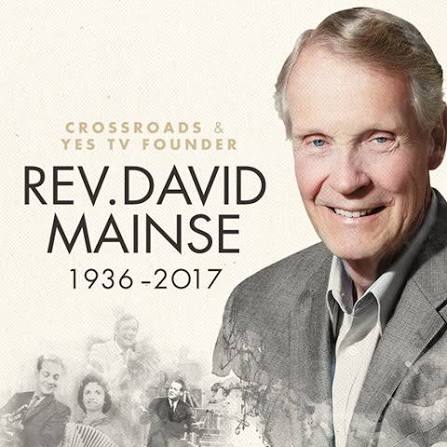
Rev. David Mainse was a Canadian Christian pastor, television broadcaster, author, and ministry founder who devoted more than five decades to sharing the message of Jesus Christ through television, preaching, and Christian media. He is best remembered as the founder of Crossroads Christian Communications and the presenter associated with 100 Huntley Street, one of Canada’s best-known Christian television programs.
Born on August 13, 1936, in Campbell’s Bay, Quebec, Canada, Mainse grew up in a family shaped by Christian ministry and education. His parents were missionaries and educators, and their influence helped introduce him to a life of faith. However, the death of his mother when he was 12 became a painful experience that affected his relationship with God. As a teenager, he went through a personal spiritual transformation that strengthened his commitment to Christianity.
Mainse began his pastoral ministry in Ontario before recognizing the potential of television as a means of reaching people with the gospel. In 1962, he launched a short television program called Crossroads. What began as a 15-minute broadcast in Pembroke, Ontario, developed into a much larger Christian communications ministry. In 1977, the daily television program 100 Huntley Street began broadcasting from Toronto, creating a platform for interviews, testimonies, music, prayer, and discussions about faith.
Throughout his career, Mainse helped establish and develop Christian broadcasting initiatives, children’s television programs, humanitarian outreach, and a national prayer ministry. He also worked closely with his wife, Norma-Jean, who played a significant role in the early television productions and in the family’s ministry.
David Mainse died on September 25, 2017, at the age of 81, following a five-year battle with myelodysplastic syndrome (MDS) leukemia. His legacy continues through Crossroads, 100 Huntley Street, YES TV, and the many people influenced by his ministry.
Key Takeaways
- Full name: David Mainse, widely known as Reverend David Mainse.
- Date of birth: August 13, 1936.
- Date of death: September 25, 2017.
- Age at death: 81 years.
- Birthplace: Campbell’s Bay, Quebec, Canada.
- Nationality: Canadian.
- Occupation: Pastor, television broadcaster, author, and ministry founder.
- Wife: Norma-Jean Rutledge Mainse, whom he married in 1958.
- Children: Four children.
- Major ministry: Crossroads Christian Communications.
- Best-known program: 100 Huntley Street.
- Broadcasting career: Launched his first television program, Crossroads, in 1962.
- Other contribution: Helped establish YES TV and supported humanitarian outreach and Christian communications training.
At a Glance
David Mainse was a pioneering figure in Canadian Christian broadcasting. His career demonstrated how television could be used to share the gospel, present personal testimonies, encourage prayer, and introduce Christian perspectives to a broad audience.
His ministry was not limited to the pulpit or television studio. Through Crossroads, he helped support children’s programming, international broadcasting, Christian media training, and humanitarian relief. His wife, Norma-Jean, was an important partner in the development of their television work, and their family remained closely connected to Christian ministry.
Mainse stepped down as chief executive officer of Crossroads and as host of 100 Huntley Street in 2003, but continued contributing to Christian communication through special appearances and his devotional writing. His death in 2017 marked the end of a remarkable public ministry, while the organizations and programs he helped establish continued serving audiences.
| Quick Facts | Details |
|---|---|
| Full Name | David Mainse |
| Common Name | Reverend David Mainse |
| Date of Birth | August 13, 1936 |
| Date of Death | September 25, 2017 |
| Age at Death | 81 years (2017) |
| Birthplace | Campbell’s Bay, Quebec, Canada |
| Nationality | Canadian |
| Profession | Pastor, broadcaster, author, ministry founder |
| Wife | Norma-Jean Rutledge Mainse |
| Year of Marriage | 1958 |
| Children | Four |
| Parents | Christian missionaries and educators |
| Ministry Organization | Crossroads Christian Communications |
| Signature Television Program | 100 Huntley Street |
| First Television Program | Crossroads |
| First Broadcast | June 2, 1962 |
| Other Broadcasting Venture | YES TV, originally launched as CTS |
| Known For | Christian broadcasting, evangelism, prayer ministry, humanitarian outreach |
Early Life and Family Background
David Mainse was born on August 13, 1936, in Campbell’s Bay, Quebec, Canada. He grew up near Ottawa in a family whose life revolved around Christian faith, education, and service. His parents were missionaries and educators, and their influence helped shape his early understanding of Christianity and the importance of communicating faith to others.
His childhood was not without hardship. When Mainse was 12, his mother died. The loss deeply affected him, and he experienced anger toward God during the years that followed. This period became an important part of his personal story because it showed that his eventual commitment to Christian ministry developed through struggle rather than an uninterrupted sense of certainty.
At approximately 16, Mainse experienced a religious conversion that renewed his relationship with God. His faith became a defining influence on his future choices, including his decision to pursue Christian ministry.
He also began teaching in public schools while still a teenager. His early experience in education would later complement his work as a preacher and broadcaster, where explaining ideas clearly and communicating with different audiences were essential skills.
Education and Preparation for Ministry
Mainse studied theology at Eastern Pentecostal Bible College in Peterborough, Ontario. His theological training helped prepare him for pastoral work within the Pentecostal Christian tradition.
After his studies, he entered church ministry and was ordained. He served congregations in several Ontario communities, including Brighton, Deep River, Sudbury, and Hamilton.
These years provided practical experience in preaching, pastoral care, and church leadership. They also helped him understand the needs of people facing personal, family, and spiritual challenges.
Mainse’s later decision to enter television broadcasting grew out of this pastoral experience. He recognized that traditional church services could reach only the people who attended in person, while television could carry Christian teaching into homes across Canada.
David Mainse’s Pastoral Ministry
Before becoming widely known as a television broadcaster, Mainse served as a pastor in local churches. One of his important appointments was at Hamilton Bethel Gospel Tabernacle, where he served before leaving full-time pastoral work in 1971 to concentrate on broadcasting.
His experience as a pastor influenced the style of ministry he later developed through television. He wanted to communicate Christian teaching in a way that was understandable and accessible to ordinary people, including those who might not belong to a church or feel comfortable attending one.
Mainse did not abandon his pastoral concerns when he entered broadcasting. Prayer, personal testimony, encouragement, and the message of Jesus Christ remained central to his work.
His career illustrates how pastoral ministry can extend beyond a church building. By combining preaching with television production, interviews, music, and prayer support, he helped create a format through which Christian communication could reach people in different circumstances.
The Beginning of Crossroads in 1962
David Mainse’s broadcasting career began on June 2, 1962, in Pembroke, Ontario. While serving as a pastor, he launched a 15-minute television program called Crossroads that aired after the late-night news.
The format was straightforward. Mainse delivered a Christian message, while his wife, Norma-Jean, and members of her family contributed music. The program combined preaching and music in a format that could be enjoyed by viewers at home.
The initial broadcast was modest, but the idea behind it was ambitious. Mainse believed television could become a valuable means of sharing the gospel with people who might otherwise have little contact with Christian teaching.
As the program gained an audience, Crossroads expanded to additional stations. What began as a short local broadcast gradually developed into a broader Christian communications operation.
In 1971, Mainse left his pastoral position at Hamilton Bethel Gospel Tabernacle to concentrate on television ministry. This was a major turning point in his career. Instead of treating broadcasting as an occasional supplement to church work, he made it his principal ministry focus.
The Growth of Crossroads Christian Communications
Crossroads developed from a television program into a Christian media organization with multiple activities. Under Mainse’s leadership, it produced television programs, supported prayer services, developed children’s programming, and pursued international broadcasting and humanitarian outreach.
The organization also invested in the training of Christian communicators. In 1981, it launched a School of Broadcasting and Communication to prepare people for work in Christian media. The school operated until 2008 and trained students who later worked in different countries.
Crossroads’ work extended into humanitarian assistance as well. In 1982, it established an emergency response and development initiative that supported relief and development projects internationally. This broadened the organization’s activities beyond broadcasting and reflected Mainse’s conviction that Christian ministry should address practical human needs as well as spiritual concerns.
By the 1990s, Crossroads had become a substantial media operation. In 1992, the organization moved its headquarters to a purpose-built production facility in Burlington, Ontario.
The growth of Crossroads demonstrated Mainse’s ability to develop a long-term organization around a simple but powerful idea: use media to make Christian teaching accessible to a wider audience.
100 Huntley Street: David Mainse’s Most Recognized Television Program
One of the defining achievements of Mainse’s career was the development of 100 Huntley Street, a Christian television program named after the Toronto street address of its studio.
The daily program began broadcasting on June 15, 1977. It developed from Mainse’s earlier work on Crossroads and gave the ministry a more extensive platform for interviews, personal testimonies, music, discussion, and prayer.
Norma-Jean played a major role in the program’s early development, producing its daily broadcasts. Mainse’s idea of incorporating telephone prayer lines also became an important feature of the ministry. Volunteers were available around the clock to offer prayer and support to people who contacted the program.
The show’s format was distinctive because it brought together Christian leaders and guests from different denominational backgrounds. Rather than limiting every discussion to a single style of church service, it offered conversations about faith, personal struggles, spiritual questions, and life experiences.
Over the years, 100 Huntley Street featured thousands of guests and received millions of calls from people seeking prayer or assistance. The program became a recognizable part of Canadian Christian broadcasting and helped establish Crossroads as a major presence in religious media.
Its lasting importance is not only its longevity but also the way it brought Christian conversations into homes. Viewers could encounter stories of faith, hear people discuss personal challenges, and request prayer without physically attending a church.
Children’s Television and Circle Square Ranches
Mainse’s vision for Christian communication extended to children and young people. Crossroads developed children’s television programming, including Circle Square, which reached audiences in numerous countries.
The organization also became involved in a network of summer camps known as Circle Square Ranches. This initiative grew after Mainse received letters from children experiencing family difficulties. He encouraged viewers to respond practically, and a donated ranch property in 1978 helped make the first camp possible.
The camps subsequently expanded into a larger program offering children opportunities for outdoor activities, learning, and personal development within a Christian environment.
In 2011, Crossroads transferred Circle Square Ranches to Inter-Varsity Christian Fellowship, which operated the camps through its established camping network.
This aspect of Mainse’s legacy demonstrates that his ministry was not restricted to television audiences. He also encouraged projects that sought to serve children directly and provide positive experiences outside their homes and schools.
International Broadcasting and the Crossroads Creation Series
Mainse believed Christian media could reach people across national and cultural boundaries. One example was the Crossroads Creation Series, which he hosted and executive-produced in 1979.
The series was broadcast in the Soviet Union during a period when religious communication faced significant restrictions. Its stated aim was to introduce questions of faith and explore creation from a Christian perspective, rather than relying solely on conventional preaching.
Mainse subsequently travelled to Moscow to participate in a conference involving Christian leaders from the Soviet republics.
Crossroads also became involved in the international distribution of children’s programming, including Kingdom Adventure. These productions helped bring Canadian Christian television content to audiences outside Canada.
At the turn of the millennium, Mainse launched the Channel of Hope project from Expo 2000 in Hanover, Germany. The project used satellite networks to deliver programming around the clock for six months.
These initiatives reflected Mainse’s belief that television could cross geographical and cultural boundaries and create opportunities for Christian communication in places where traditional outreach was more difficult.
The Founding of YES TV
Another important achievement in Mainse’s career was the creation of Crossroads Television System, known as CTS, in 1998.
The project followed efforts to make it possible for religious organizations to own and operate television broadcasting stations in Canada. Mainse and his team presented arguments to the Canadian Radio-television and Telecommunications Commission, advocating greater opportunities for religious broadcasters.
CTS launched as a separate broadcast corporation with a mandate to provide religious, family-friendly, and balanced programming. In 2014, the network adopted the name YES TV.
The development of the network expanded the reach of Christian and family-oriented programming in Canada. It also demonstrated that Mainse’s interests extended beyond hosting a television show. He helped build the organizational and broadcasting structures needed to sustain a wider media presence.
Humanitarian Outreach and Prayer Ministry
Prayer was a central part of Mainse’s approach to broadcasting. He believed viewers should have an opportunity to seek prayer and personal encouragement rather than simply watch a program and move on.
The telephone prayer lines associated with 100 Huntley Street provided a way for people to contact volunteers at any time. Over the years, the service received millions of calls, including requests connected with family difficulties, grief, illness, loneliness, and spiritual questions.
Mainse also helped establish Crossroads’ emergency response and development work. Through this initiative, the organization supported humanitarian projects in different parts of the world.
These efforts reflected two connected aspects of his ministry: spiritual care through prayer and practical assistance through relief and development projects. His approach was based on the belief that Christian communication should encourage both faith and compassionate action.
David Mainse’s Wife: Norma-Jean Mainse
David Mainse married Norma-Jean Rutledge in 1958. Their marriage lasted 59 years, until his death in 2017.
Norma-Jean was much more than the spouse of a well-known pastor and broadcaster. She was an active partner in the development of their television ministry. In the early Crossroads broadcasts, she contributed music with members of her family, and she later served as the producer of 100 Huntley Street.
Her production work was especially important when the program began its daily broadcast format in 1977. Producing a live, extended television program required planning, coordination, and the ability to manage the different elements that made up each broadcast.
Their partnership combined family life with decades of public ministry. While David became the best-known on-screen figure, Norma-Jean’s contribution behind the scenes helped establish and sustain the broadcasting work.
Their long marriage also formed part of the family’s public story, and their children and grandchildren remained connected to Christian service in different ways.
David Mainse’s Children and Family Legacy
David and Norma-Jean Mainse had four children: Elaine, Ellen, Reynold, and Ron. Their family later grew to include 16 grandchildren and 13 great-grandchildren.
The Mainse family has been associated with Christian ministry, communication, and related outreach activities. The family’s involvement reflects the broader pattern of their lives, in which personal faith and public service often intersected.
However, each family member has an individual life and career. David’s biography should not be taken as a substitute for separate accounts of his children’s work or personal circumstances.
The longevity of the family’s involvement in ministry is one part of Mainse’s wider legacy. His work helped establish organizations and programs that continued after his death, while family members also maintained their own connections to Christian service.
David Mainse’s Books and Devotional Writing
Mainse’s public ministry was not confined to television. He also communicated through written material, including devotional reflections and Bible-based teaching.
In the later years of his life, he developed the 100 Words devotional blog. It offered readers a daily Bible passage, a key verse, a short commentary, a prayer, and personal reflections connected with his life and ministry.
The devotional project was designed to guide readers through Scripture over an extended period. Its short format made it accessible to people who wanted to build a daily reading habit without committing to lengthy study sessions.
Following Mainse’s death, the devotional work continued as part of his ministry legacy. It remains an example of how his approach to communication adapted to changing technology, moving from television to online reading and email delivery.
His written work shared the same broad purpose as his broadcasting: encourage people to engage with the Bible, reflect on their faith, and develop a personal relationship with Jesus Christ.
Awards, Honors, and Recognition
Mainse received recognition for his contribution to Christian broadcasting and public service. His achievements included awards for television production and honors connected with his work in Christian communication.
In 2003, he received an honorary doctorate from Tyndale University in Toronto. McMaster Divinity College also awarded him an honorary doctorate in 2011.
In 2005, he received the Movieguide Lifetime Faith and Values Award. In 2008, the Canadian Council of Christian Charities honored him for integrity in personal life and organizational leadership in the context of long-term charity work.
He was also involved in judging the Templeton Prize for Progress in Religion at the request of Sir John Templeton.
These recognitions reflected the range of his work, including broadcasting, religious communication, and the development of organizations serving Christian and humanitarian purposes.
David Mainse’s Final Years and Death
In 2012, Mainse was diagnosed with myelodysplastic syndrome, commonly known as MDS, a disorder affecting the production of healthy blood cells. He continued his Christian communication work during the years that followed, although his health was affected by the illness.
He stepped down as chief executive officer of Crossroads and as host of 100 Huntley Street in the summer of 2003. However, he continued to make occasional appearances and remained involved in devotional writing and other projects.
Between 2010 and 2012, he undertook a Thank You Canada Tour, visiting 170 communities to meet supporters and express appreciation for their support of his ministry.
David Mainse died on September 25, 2017, at the age of 81. His death was announced by Crossroads Christian Communications, the organization he had founded decades earlier.
His passing was widely mourned within Canadian Christian broadcasting. Tributes emphasized his role in making the gospel accessible through television and his commitment to encouraging people to develop a personal relationship with Jesus Christ.
David Mainse’s Legacy in Christian Broadcasting
David Mainse’s legacy is closely tied to the growth of Christian broadcasting in Canada. He began with a short television program in 1962 and helped build an organization that developed daily television, children’s programming, international projects, prayer services, and humanitarian outreach.
The success of 100 Huntley Street demonstrated that Christian television could offer more than sermons. By incorporating interviews, personal stories, music, and prayer, the program created a format that could engage people with different experiences and questions.
His role in the development of CTS, later YES TV, also contributed to the wider availability of religious and family-oriented programming in Canada.
Crossroads continued operating after his death, and the devotional project associated with his name preserved another part of his work. His story is therefore not simply about an individual broadcaster. It is also about the organizations, programs, and communication methods that he helped establish.
David Mainse’s Net Worth
David Mainse’s estimated net worth is $10 million. This is an estimate of his personal wealth rather than a verified accounting of his estate.
His long career included decades of Christian broadcasting, leadership of Crossroads Christian Communications, authorship and devotional writing, and the development of television initiatives such as 100 Huntley Street and YES TV. These activities contributed to his professional standing and long-term influence in Christian media.
It is important to distinguish Mainse’s personal finances from the finances of Crossroads and other organizations associated with his ministry. Organizational assets, donations, operating budgets, and charitable funds should not automatically be counted as an individual’s wealth.
Frequently Asked Questions – FAQs
1. Who was David Mainse?
David Mainse was a Canadian pastor, television broadcaster, author, and Christian ministry founder. He founded Crossroads Christian Communications and became widely known for his role in developing 100 Huntley Street.
2. How old was David Mainse when he died?
David Mainse was 81 years old when he died on September 25, 2017.
3. When was David Mainse born?
He was born on August 13, 1936, in Campbell’s Bay, Quebec, Canada.
4. What was David Mainse’s estimated net worth?
David Mainse’s estimated net worth was $10 million. This figure is an estimate of his personal wealth, not a verified statement of his estate or the finances of Crossroads Christian Communications.
5. Who was David Mainse’s wife?
His wife was Norma-Jean Rutledge Mainse. They married in 1958 and remained together for 59 years, until his death in 2017.
6. How many children did David Mainse have?
David and Norma-Jean Mainse had four children: Elaine, Ellen, Reynold, and Ron.
7. What was David Mainse famous for?
He was best known for founding Crossroads Christian Communications and helping develop 100 Huntley Street, a long-running Canadian Christian television program.
8. What was Crossroads Christian Communications?
Crossroads Christian Communications is a Christian media organization founded by Mainse. Its activities have included television broadcasting, prayer services, children’s programming, media training, and humanitarian outreach.
9. When did David Mainse start his television ministry?
He launched the 15-minute program Crossroads on June 2, 1962, in Pembroke, Ontario.
10. What is 100 Huntley Street?
100 Huntley Street is a Christian television program that began daily broadcasting on June 15, 1977. It features interviews, personal testimonies, music, discussions about faith, and prayer.
11. Was David Mainse a pastor before becoming a broadcaster?
Yes. Mainse served as a pastor in several Ontario communities before leaving his pastoral position at Hamilton Bethel Gospel Tabernacle in 1971 to focus on broadcasting.
12. What denomination was David Mainse associated with?
Mainse was a Pentecostal Christian minister associated with the Pentecostal Assemblies of Canada tradition.
13. Who helped David Mainse produce 100 Huntley Street?
His wife, Norma-Jean Mainse, played a major role in producing the program, particularly during its early daily broadcasts.
14. Did David Mainse establish YES TV?
Yes. He founded Crossroads Television System, known as CTS, in 1998. The network later adopted the name YES TV in 2014.
15. What happened to David Mainse’s health?
He was diagnosed with myelodysplastic syndrome, or MDS, in 2012. He died in 2017 after a five-year battle with the illness.
16. What was David Mainse’s religious background?
He grew up in a Christian family. After struggling with anger toward God following his mother’s death, he experienced a religious conversion at approximately 16 and later entered pastoral ministry.
17. Did David Mainse write books?
Mainse produced Christian teaching and devotional material, particularly through his later 100 Words devotional blog, which offered daily Bible readings, commentary, prayers, and personal reflections.
18. What was the 100 Words devotional?
It was a daily devotional project associated with Mainse that guided readers through Scripture using a Bible reading, a key verse, a short commentary, a prayer, and personal stories.
19. How many grandchildren did David Mainse have?
At the time of his death, Mainse had 16 grandchildren and 13 great-grandchildren.
20. What was Circle Square Ranch?
Circle Square Ranches were Christian summer camps that developed from a property donated to Crossroads in 1978. They provided children with outdoor activities and experiences within a Christian environment.
21. Did David Mainse work in international broadcasting?
Yes. Crossroads produced and distributed programming internationally. Mainse hosted and executive-produced the Crossroads Creation Series in 1979 and later launched the Channel of Hope project at Expo 2000 in Germany.
22. What awards did David Mainse receive?
His honors included an honorary doctorate from Tyndale University in 2003, an honorary doctorate from McMaster Divinity College in 2011, the Movieguide Lifetime Faith and Values Award in 2005, and recognition from the Canadian Council of Christian Charities in 2008.
23. When did David Mainse retire from 100 Huntley Street?
He stepped down as chief executive officer of Crossroads and host of 100 Huntley Street in the summer of 2003, although he continued to participate in special productions and devotional work.
24. Where did David Mainse die?
He died on September 25, 2017, at the age of 81. Crossroads announced his death in Burlington, Ontario; public biographies report his death in the Hamilton, Ontario, area.
25. Why is David Mainse important to Canadian Christianity?
He helped establish Christian broadcasting as a major means of reaching Canadian audiences. His work with Crossroads, 100 Huntley Street, YES TV, prayer services, and humanitarian outreach influenced Christian communication for more than five decades.
Conclusion
David Mainse’s life was marked by a sustained commitment to Christian ministry and communication. From his early years as a pastor in Ontario to the launch of Crossroads in 1962 and the growth of 100 Huntley Street, he helped shape a significant chapter in Canadian Christian broadcasting.
Working alongside his wife, Norma-Jean, he developed a media ministry that combined preaching, music, interviews, personal testimonies, and prayer. His contributions also extended to children’s programming, international broadcasting, Christian media training, and humanitarian relief.
Mainse died in 2017 at the age of 81, leaving behind his wife, four children, grandchildren, and a lasting institutional legacy. His estimated net worth is $10 million, although this should be understood as an estimate rather than a verified accounting of his estate.
More broadly, his legacy rests in the programs, organizations, and devotional resources that continued to share Christian teaching after his death. His career illustrates how a small local television broadcast can grow into a lasting platform for ministry and public communication.
Explore More on BelieversBio
- Billy Graham Biography: Explore the life and worldwide evangelistic ministry of one of the most widely known Christian preachers of the twentieth century.
- Charles Stanley Biography: Learn about the American pastor and Bible teacher whose sermons reached audiences through television and radio.
- Rick Warren Biography: Discover the pastor and author known for The Purpose Driven Life and his work in church leadership.
- Chris Oyakhilome Biography: Read about the Nigerian pastor and broadcaster known for Christ Embassy and his Christian media work.
- Enoch Adeboye Biography: Learn about the life and ministry of the Nigerian pastor who leads the Redeemed Christian Church of God.
References
- David Mainse Official Biography, Crossroads
- Crossroads Christian Communications, Reverend David Mainse
- Crossroads Christian Communications, Official History
- Crossroads Christian Communications, Official Press Release on David Mainse’s Death
- Canadian Council of Christian Charities, David Mainse: A Leader of Personal and Ministry Integrity
- CBN News, Canada’s Pastor David Mainse Dies at 81
- The Interim, David Mainse, RIP

Bakare Sherifdeen is the Founder and Publisher of BelieversBio, a Christian reference platform dedicated to publishing well-researched biographies of pastors, evangelists, Christian authors, churches, ministries, and influential Christian leaders worldwide.
He has over six years of experience in SEO, WordPress development, technical SEO, and digital publishing. His work focuses on producing accurate, thoroughly researched, and trustworthy content that helps readers better understand the people and organizations shaping Christianity today.
Through BelieversBio, he is committed to maintaining high editorial standards by verifying information with reliable sources and updating articles to ensure long-term accuracy and usefulness.