Last Updated on October 13, 2026 by Bakare Sherifdeen
Introduction
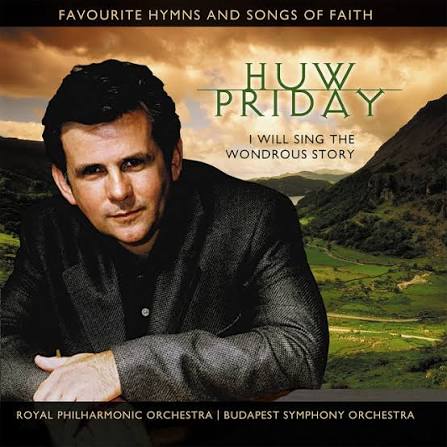
Huw Priday is a Welsh tenor, classical singer, Christian recording artist, and ministry leader who transitioned from an international operatic career to a life centered on sharing the Christian gospel. Before becoming widely associated with Christian worship and revival events, he performed with major opera companies, appeared at prestigious concert venues, and sang for members of royal families and other distinguished audiences.
Born in Brecon, a market town in Mid Wales, Priday developed his musical abilities in a country known for its strong singing traditions. His professional training took him to leading music institutions in London, opening doors to performances across Europe and other parts of the world.
However, his life and career later took a different direction. Priday has spoken about his Christian faith, his decision to devote himself to ministry, and the personal challenges that threatened his ability to sing. His testimony has become an important part of his public ministry, alongside his musical performances and message about faith, perseverance, and spiritual renewal.
This Huw Priday biography explores his early life, musical education, international career, Christian ministry, wife, family, achievements, and estimated net worth.
Key Takeaways
- Huw Priday is a Welsh tenor and Christian recording artist.
- He was born in Brecon, Mid Wales, and is proud of his Welsh heritage.
- He studied at the Guildhall School of Music and Drama and the Royal College of Music in London.
- His professional career included performances with major British opera companies and at international concert venues.
- He performed the role of Piangi in the London production of The Phantom of the Opera.
- His career later developed toward Christian ministry, worship, evangelism, and revival meetings.
- He is associated with a testimony about overcoming a serious accident that threatened his singing voice.
- His wife is Elizabeth Woollett, a singer who has performed alongside him.
- His exact age and personal net worth have not been reliably established in the public sources reviewed.
Quick Facts
| Quick Facts | Details |
|---|---|
| Full Name | Huw Priday |
| Profession | Welsh tenor, classical singer, Christian recording artist, and ministry figure |
| Nationality | Welsh |
| Place of Birth | Brecon, Mid Wales |
| Age | Not publicly confirmed |
| Date of Birth | Not reliably established |
| Education | Guildhall School of Music and Drama; Royal College of Music |
| Wife | Elizabeth Woollett |
| Children | Not publicly confirmed |
| Known For | Opera, The Phantom of the Opera, Christian music, and revival ministry |
| Music Genre | Classical, opera, sacred music, and Christian music |
| Ministry Focus | Gospel, worship, Christian testimony, and spiritual revival |
Huw Priday’s Early Life and Background
Huw Priday was born in Brecon, a historic market town in Mid Wales. Growing up in Wales meant being surrounded by a culture with a deep appreciation for music, choral singing, and traditional songs. These musical traditions formed a fitting background for someone who would eventually build an international career as a tenor.
Priday has expressed pride in his Welsh heritage and has drawn connections between Wales’s musical identity and its Christian revival history. His later interest in the 1904 Welsh Revival reflects the place that both faith and national heritage hold in his public ministry.
Although information about his parents, siblings, and childhood circumstances is limited, his later achievements demonstrate that he pursued music seriously from an early stage. Rather than limiting himself to local performances, he trained professionally and worked toward a career in classical singing.
Details about his exact birth date and age have not been reliably confirmed in the available biographical sources. Consequently, a specific age should not be assigned to him without better documentation.
Huw Priday’s Education and Musical Training
Priday received formal musical training at two respected London institutions: the Guildhall School of Music and Drama and the Royal College of Music.
These institutions have trained generations of professional musicians, singers, actors, and performers. For an aspiring tenor, this kind of education provides opportunities to develop vocal technique, musical interpretation, stage presence, and an understanding of the demanding repertoire associated with opera and classical performance.
His training helped prepare him for a professional career that extended beyond Wales. After graduating in 1986, he began appearing with major British opera companies, according to his published biography.
Classical singing requires more than a naturally strong voice. Performers must develop breath control, vocal endurance, accurate pitch, diction, musical discipline, and the ability to communicate a character’s emotions through singing. Priday’s subsequent work in opera, concerts, and oratorio demonstrated his ability to operate across several forms of classical performance.
His education laid the foundation for a career that would take him to prestigious venues and international audiences before his work increasingly focused on Christian ministry.
Huw Priday’s Professional Music Career
Huw Priday initially built his reputation as a classical tenor. His professional work included opera, oratorio, concerts, and performances at major cultural venues.
After completing his musical studies, he appeared with major British opera companies and performed in several European countries, including Germany, France, Spain, Sweden, and Denmark. His concert work also took him to audiences in Australia, the United States, the Middle East, and the Far East.
His career brought opportunities to perform for distinguished audiences, including members of the British royal family. His published biography also lists venues such as the Royal Opera House at Covent Garden, the Royal Albert Hall in London, the Sydney Concert Hall, and the Royal Opera House in Stockholm among his performance venues.
These appearances reflect the international reach of his work as a classical singer. Opera and concert careers often involve extensive preparation, travel, rehearsals, and collaboration with conductors, orchestras, and other performers. Priday’s work across different countries required him to adapt to varied productions and audiences while maintaining the technical demands of professional singing.
His Role in The Phantom of the Opera
One of Priday’s notable professional credits was performing the role of Piangi in the London West End production of Andrew Lloyd Webber’s The Phantom of the Opera.
The musical is known internationally for its demanding vocal parts, elaborate staging, and dramatic storytelling. Piangi is an opera singer within the story, making the role particularly suited to a performer with classical vocal training.
His participation in the production connected his classical background with one of the best-known stage musicals of modern theatre. It also demonstrated his ability to work in a theatrical environment where singing must be combined with character performance and stage movement.
Other Important Performances
Priday’s musical career also included a number of significant concert and recording-related appearances.
In 1999, he starred in the world premiere of Alun Hoddinott’s Tower in Swansea. Another notable project was Oratorio Terezin, composed by Ruth Fazal, which premiered in Toronto in 2003. Priday participated in the work, which connects music with the history and suffering associated with the Holocaust.
He also appeared on British television programmes, including Songs of Praise and My Favorite Hymns. These appearances brought his singing to audiences beyond traditional opera houses and concert halls.
His background in classical music continued to inform his later Christian work, where vocal performance became a way to communicate spiritual themes and support worship gatherings.
Huw Priday’s Christian Faith and Call to Ministry
A major turning point in Priday’s life came when his professional priorities began to change. A profile published for a Billy Graham Evangelistic Association event states that in 2002 he felt called by God to leave the professional music arena and enter ministry.
The transition represented a significant change for someone who had spent years developing an international performance career. Instead of focusing primarily on opera and concert engagements, he increasingly used his musical ability and personal testimony in Christian settings.
Priday’s ministry has included Christian music, speaking, worship gatherings, and events centered on evangelism and spiritual renewal. His story illustrates how he came to view singing not simply as a profession but also as a means of serving his faith.
His later public work has included an emphasis on revival, a theme closely connected to his Welsh background. Wales experienced a significant Christian revival in 1904, and Priday has participated in projects exploring that period and its influence on the church.
His ministry brings together music, personal testimony, and an interest in encouraging Christians to pursue a deeper relationship with God.
Huw Priday’s Ministry and Revival Work
Priday’s public ministry is closely associated with the use of music and testimony to communicate the Christian message. His classical training gives him a distinctive background within Christian music, particularly at events that combine worship, traditional hymns, and accounts of personal faith.
He has participated in Christian events in the United Kingdom and internationally. His performances have included sacred music and songs connected with the Christian heritage of Wales.
Interest in the Welsh Revival of 1904
The Welsh Revival of 1904 remains an important part of Welsh Christian history. It is commonly associated with Evan Roberts and a period of intense religious activity that influenced churches and Christian communities in Wales and beyond.
Priday’s public work has included involvement in a documentary project about this revival. His perspective as a Welsh Christian musician gives him a personal connection to the cultural and religious history explored in such projects.
The revival remains a subject of interest for Christians studying evangelism, prayer, worship, and spiritual renewal. By participating in work that revisits this period, Priday connects his musical ministry with a wider historical conversation about the influence of Christian faith on communities.
Music as a Tool for Evangelism
Priday’s career demonstrates how musical performance can serve different purposes at different stages of a person’s life. In opera, singing helps communicate a dramatic story through music and theatre. In Christian ministry, music can support worship, communicate spiritual themes, and create opportunities for reflection.
His experience in classical performance allows him to approach Christian music with an understanding of vocal expression, interpretation, and the emotional impact of a live performance.
Rather than abandoning his musical background entirely, he has continued to draw on it in his ministry. This connection between professional skill and Christian service is a defining feature of his public story.
Huw Priday’s Accident and Testimony of Recovery
One of the most dramatic accounts associated with Priday’s ministry concerns a serious electrical accident that reportedly damaged his lungs and affected his ability to sing.
According to the testimony presented on his official website, the accident created a period of physical difficulty and uncertainty about whether he would be able to continue using his voice as he had before. For a professional tenor, the loss of vocal ability would threaten not only a career but also a central part of personal identity.
His account describes a period of emotional struggle followed by renewed hope and a gradual return to singing. He attributes his recovery to God’s intervention and presents the experience as an important testimony of faith.
The story has become part of his message about perseverance through suffering. He encourages audiences to remain hopeful during difficult circumstances and to trust God even when the future appears uncertain.
This account should be understood as Priday’s own faith testimony. The available biographical material does not provide a detailed independent medical record of the accident or recovery, but the experience is clearly presented as an important part of how he explains his continued commitment to music and ministry.
For Priday, the experience appears to have deepened the relationship between his personal faith and his public work. His message emphasizes that suffering does not have to mark the end of a person’s purpose and that difficult experiences can become part of a testimony intended to encourage others.
Huw Priday’s Wife and Marriage
Huw Priday is married to Elizabeth Woollett, a singer who has performed alongside him.
The couple’s musical connection has been mentioned in accounts of performances in Wales. Their shared involvement in singing provides a natural point of connection between Priday’s classical career and his later work in Christian music.
Publicly available information about their private relationship is limited. Details such as their wedding date, how they met, and the length of their marriage have not been reliably established in the sources reviewed.
It is therefore best to distinguish the known information about his wife from details that have not been publicly documented. Their association as singers is part of the public record, but more extensive claims about their family life would require additional reliable sources.
Huw Priday’s Children and Family Life
Priday has kept much of his family life out of the public spotlight. Although his wife, Elizabeth Woollett, is identified in accounts of their musical work, reliable information about whether they have children, their names, or their ages was not established in the sources reviewed.
The limited public information means that a detailed account of his children and wider family background cannot be provided responsibly.
His public biography is primarily centered on his musical career, Christian faith, and ministry rather than on personal family details. Unless reliable information becomes available, it is better not to speculate about the private lives of his relatives.
Huw Priday’s Achievements and Contributions
Huw Priday’s career spans professional classical music, international performance, and Christian ministry. Several aspects of his work stand out.
1. International Classical Singing Career
Priday performed with major British opera companies and appeared at respected venues in the United Kingdom and abroad. His work across opera, concerts, and oratorio reflects years of professional musical training.
2. Performance in a Major West End Musical
His role as Piangi in The Phantom of the Opera is one of his notable theatrical credits. The production brought his classical singing experience into a major musical theatre setting.
3. Participation in Significant Musical Works
His performances included the world premiere of Alun Hoddinott’s Tower and participation in Ruth Fazal’s Oratorio Terezin. These projects broadened his repertoire beyond standard operatic performances.
4. Christian Recording and Worship Ministry
Priday has used his vocal ability in Christian settings, including worship events and gospel-focused programmes. His work has helped connect classical music with Christian audiences.
5. Sharing a Personal Testimony of Faith
His account of recovering from an accident that threatened his voice has become part of his ministry message. He uses the experience to encourage people facing hardship and uncertainty.
6. Engagement With Welsh Christian History
His involvement in projects about the 1904 Welsh Revival reflects an interest in the history of Christian renewal and its continuing significance for the church.
Together, these contributions show how Priday’s career has evolved from professional performance toward a wider combination of music, testimony, and Christian ministry.
Huw Priday’s Net Worth
Huw Priday’s exact net worth has not been reliably established in publicly available sources. No credible, well-supported financial estimate was identified during the research for this biography, so assigning him a specific dollar amount would be speculative.
His professional background includes work as an international classical singer, opera performer, concert artist, and Christian recording artist. These fields can generate income through performances, engagements, recordings, and related activities, although the available sources do not disclose his personal earnings or assets.
It is important not to confuse a performer’s professional achievements or international travel with evidence of personal wealth. Without reliable financial information, Huw Priday’s net worth should be regarded as undisclosed rather than assigned an unsupported figure.
Frequently Asked Questions – FAQs
1. Who is Huw Priday?
Huw Priday is a Welsh tenor, classical singer, Christian recording artist, and ministry figure. He is known for his international opera career and his later work in Christian music, evangelism, and revival events.
2. How old is Huw Priday?
Huw Priday’s exact date of birth has not been reliably confirmed in the sources reviewed. His age in 2026 therefore cannot be stated accurately.
3. Where was Huw Priday born?
He was born in Brecon, a market town in Mid Wales. He has publicly expressed pride in his Welsh heritage.
4. Who is Huw Priday’s wife?
Huw Priday is married to Elizabeth Woollett, a singer who has performed with him. Further details about their marriage are not widely documented in the sources reviewed.
5. Does Huw Priday have children?
Reliable public information confirming whether Huw Priday has children was not found in the sources reviewed.
6. What is Huw Priday known for?
He is known for his work as a classical tenor, his role as Piangi in the London production of The Phantom of the Opera, and his later involvement in Christian music and ministry.
7. What happened to Huw Priday’s voice?
Priday’s official website describes an electrical accident that reportedly damaged his lungs and threatened his ability to sing. His testimony recounts a difficult period followed by recovery, which he attributes to God’s intervention.
8. What is Huw Priday’s net worth?
Huw Priday’s net worth has not been reliably established in public sources. There is insufficient dependable information to provide a responsible numerical estimate.
9. Did Huw Priday work in opera before becoming involved in ministry?
Yes. He trained at the Guildhall School of Music and Drama and the Royal College of Music, then pursued an international career in opera, concerts, and oratorio. A Christian event profile states that he felt called to ministry in 2002.
10. What is Huw Priday’s nationality?
Huw Priday is Welsh. He was born in Brecon, Mid Wales, and has spoken about the importance of his Welsh heritage.
Conclusion
Huw Priday’s life brings together two closely connected parts: a successful career in classical music and a later commitment to Christian ministry. From studying at respected music institutions in London to performing in opera houses and major concert venues, he established himself as a trained tenor with an international performance background.
His later work reflects a different emphasis. Through Christian music, worship gatherings, revival-related projects, and personal testimony, he has used his voice to communicate his faith and encourage others. His account of overcoming an accident that threatened his singing ability has also become a central part of his public message about perseverance and hope.
Although details about his age, children, and personal finances remain limited, his professional musical history and Christian ministry provide a clear picture of the main influences shaping his public life. Huw Priday’s story illustrates how a person’s abilities and experiences can take on new meaning when directed toward a deeply held sense of purpose.
Explore More on BelieversBio
- Brandon Lake Biography: – Learn about the contemporary Christian singer and songwriter whose music reaches worship audiences internationally.
- Fr. Rob Galea Biography: – Discover the journey of the Catholic priest, singer, and evangelist who combines music with Christian outreach.
- Russell Evans Biography: – Read about the Australian church leader and his contribution to worship, church growth, and Christian ministry.
- Wayne Alcorn Biography: – Explore the life and ministry of the Australian Christian leader known for his leadership and influence in the church.
References
- Huw Priday Official Website: About Huw Priday
- Huw Priday Official Website: Meet Huw
- Billy Graham Evangelistic Association: UK Evangelism Summit Booklet
- Neath Antiquarian Society: Cadoxton Operatic Society Historical Records
- United States Army: Chief of Chaplains Select Speaks at Division West Prayer Breakfast
- Ruth Fazal Official Website: Oratorio Terezin

Bakare Sherifdeen is the Founder and Publisher of BelieversBio, a Christian reference platform dedicated to publishing well-researched biographies of pastors, evangelists, Christian authors, churches, ministries, and influential Christian leaders worldwide.
He has over six years of experience in SEO, WordPress development, technical SEO, and digital publishing. His work focuses on producing accurate, thoroughly researched, and trustworthy content that helps readers better understand the people and organizations shaping Christianity today.
Through BelieversBio, he is committed to maintaining high editorial standards by verifying information with reliable sources and updating articles to ensure long-term accuracy and usefulness.