Last Updated on October 20, 2026 by Bakare Sherifdeen
Introduction
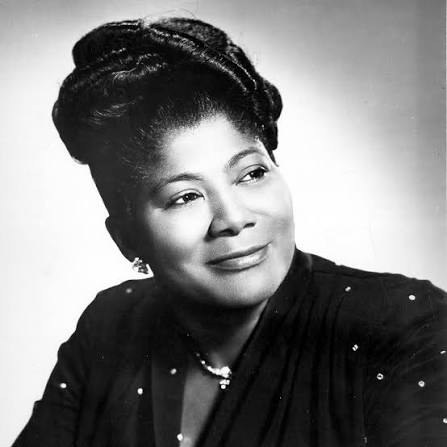
Mahalia Jackson was one of the most celebrated gospel singers of the twentieth century. Known around the world as the “Queen of Gospel,” she used her extraordinary voice to communicate Christian faith, hope, suffering, and perseverance. Her music reached far beyond church congregations, earning her an international audience and helping establish gospel as a major force in American music.
Born in New Orleans, Louisiana, on October 26, 1911, Jackson grew up in poverty and discovered her love of singing in the Baptist church. She later moved to Chicago, where she developed her career while working ordinary jobs to support herself. Her breakthrough recording, “Move On Up a Little Higher,” brought her national fame and helped transform her into one of gospel music’s most influential performers.
Jackson’s importance extended beyond music. She supported the American Civil Rights Movement, became a close associate of Dr. Martin Luther King Jr., and sang at the historic 1963 March on Washington. Her performances offered encouragement during a period when African Americans were fighting segregation and demanding equal rights.
Although Jackson died in 1972, her recordings continue to influence gospel singers and other musicians. Her story is a powerful example of how faith, artistic excellence, and determination can leave a lasting cultural legacy.
Key Takeaways
- Mahalia Jackson was an American gospel singer widely known as the Queen of Gospel.
- She was born on October 26, 1911, in New Orleans, Louisiana, and died on January 27, 1972, at age 60.
- Her breakthrough recording was “Move On Up a Little Higher.”
- Gospel composer Thomas A. Dorsey played an important role in her musical development.
- Her best-known songs include “Take My Hand, Precious Lord,” “How I Got Over,” and “Amazing Grace.”
- She supported the Civil Rights Movement and sang at the 1963 March on Washington.
- She married Isaac Hockenhull and later Sigmund Galloway. Both marriages ended in divorce.
- She received three Grammy Awards and was inducted into the Rock & Roll Hall of Fame in 1997.
- No reliable public financial record establishes her exact net worth at the time of her death.
At a Glance
Mahalia Jackson rose from humble beginnings in New Orleans to become one of the most influential gospel singers in history. Her powerful contralto voice, commitment to Christian music, and refusal to abandon gospel for commercial trends helped define her career. Through her recordings and civil rights work, she became both a musical pioneer and a respected public figure whose influence continues today.
Quick Facts
| Quick Facts | Details |
|---|---|
| Full name | Mahala Jackson, professionally known as Mahalia Jackson |
| Date of birth | October 26, 1911 |
| Place of birth | New Orleans, Louisiana, United States |
| Date of death | January 27, 1972 |
| Age at death | 60 years old |
| Nationality | American |
| Profession | Gospel singer and recording artist |
| Nickname | Queen of Gospel |
| Religion | Christianity; raised in the Baptist tradition |
| Musical style | Gospel |
| Breakthrough recording | “Move On Up a Little Higher” |
| Other notable songs | “Take My Hand, Precious Lord,” “How I Got Over,” “Amazing Grace” |
| First husband | Isaac Hockenhull |
| Second husband | Sigmund Galloway |
| Children | No biological children publicly documented |
| Civil rights connection | Supporter of Dr. Martin Luther King Jr. and the Civil Rights Movement |
| Major honors | Three Grammy Awards; Rock & Roll Hall of Fame induction |
Early Life and Family Background
Mahalia Jackson was born Mahala Jackson on October 26, 1911, in New Orleans, Louisiana. She grew up in the city’s Black Pearl neighborhood, where several relatives shared a small home. Her family experienced poverty, and the death of her mother, Charity Clark, when Mahalia was still a young child brought further hardship.
Her father, Johnny Jackson, worked to support the family, while her aunt Mahalia Paul, known as Aunt Duke, helped raise her. The household was deeply religious, and church life shaped Mahalia’s early understanding of music and faith.
The family encouraged gospel singing and discouraged secular music at home. As a result, Mahalia’s childhood was filled with hymns, spirituals, and the sound of congregational worship. She began singing in church at a young age, and her strong voice quickly became noticeable.
Although New Orleans was famous for jazz and blues, Jackson developed a lasting commitment to gospel. She would later become known for her ability to communicate deep emotion through religious songs, combining the musical traditions of her hometown with her own distinctive style.
Mahalia Jackson’s Childhood and First Experience of Singing
Jackson’s earliest musical experiences came through the Baptist church. Singing was not simply entertainment in her family and congregation. It was an expression of belief, a way of worshipping God, and a source of encouragement during difficult times.
She did not receive the kind of formal musical training associated with conservatories or classical performance. Instead, she learned by listening, singing in church, and developing her voice through experience.
Her contralto voice had unusual depth and strength. She could move from quiet, intimate passages to powerful climaxes while maintaining a strong connection to the song’s spiritual message. That combination became one of her most recognizable characteristics.
Jackson also encountered the blues and other musical traditions that flourished in New Orleans. Although she appreciated the musical environment around her, she chose to build her professional identity around gospel rather than pursue a career as a blues singer.
This decision would define her career. At a time when secular music could offer commercial opportunities that gospel did not always provide, Jackson continued to prioritize the religious music she believed she was meant to sing.
Moving to Chicago and Building a Musical Career
Jackson moved from New Orleans to Chicago as a teenager during the Great Migration, when many African Americans left the South for northern cities in search of greater opportunities. Chicago had a growing Black population, active church communities, and an expanding gospel music scene.
She joined the Greater Salem Baptist Church and began singing more widely. She also became associated with the Johnson Gospel Singers, gaining experience performing beyond her local congregation.
Her early years in Chicago were financially difficult. Jackson worked as a domestic servant and laundress while pursuing music. She sang at churches and gospel gatherings, gradually developing a reputation for her vocal power and expressive delivery.
Her career did not become successful overnight. She spent years building relationships, performing for audiences, and refining her style. Those early struggles helped shape her determination and reinforced her belief that gospel music was her calling.
Jackson’s move to Chicago proved decisive. The city gave her access to a wider network of musicians and churches and placed her in the environment where she would become one of the most influential gospel singers of her generation.
Thomas A. Dorsey and Mahalia Jackson’s Musical Development
Thomas A. Dorsey was one of the most important figures in Jackson’s musical development. Known as a pioneer of modern gospel music, Dorsey combined religious lyrics with musical influences drawn from blues and other Black musical traditions.
Jackson performed his compositions and developed a long professional association with him. Dorsey recognized her talent, while her interpretations helped bring his songs to wider audiences.
One of the most important songs associated with their partnership was “Take My Hand, Precious Lord.” Dorsey wrote the song after experiencing personal grief, and it became one of the most enduring compositions in gospel music. Jackson’s interpretation brought particular emotional force to its message of seeking God’s guidance during suffering.
Their association helped Jackson develop her musical identity, but she was not simply a performer of Dorsey’s work. She developed a distinctive sound and approach of her own, marked by powerful phrasing, expressive improvisation, and an unwavering commitment to gospel.
Her success also contributed to the wider development of gospel music as a recorded and performed art form. She helped demonstrate that the genre could preserve its religious foundation while reaching audiences well beyond the church.
Mahalia Jackson’s Breakthrough With “Move On Up a Little Higher”
Jackson’s career reached a turning point with “Move On Up a Little Higher.” Recorded for Apollo Records in 1947 and released around that period, the song became a major success and introduced her voice to a much larger audience.
The recording achieved extraordinary sales for gospel music and established Jackson as a national star. It helped show that recordings rooted in Christian worship could achieve substantial commercial success without abandoning their spiritual message.
The song’s popularity brought new opportunities for concerts, radio appearances, and further recordings. Jackson’s audience expanded beyond regular churchgoers to include listeners who were discovering gospel through records and broadcasts.
“Move On Up a Little Higher” also became a landmark in the history of gospel music. Its success demonstrated that the genre could reach a broad public while retaining the faith and emotional intensity at its core.
The recording remains one of Jackson’s signature works and is central to her reputation as the Queen of Gospel.
International Fame and Concert Performances
Following her breakthrough, Jackson’s reputation grew across the United States and internationally. She performed in major concert venues, appeared on radio and television, and toured abroad.
Her 1950 appearance at Carnegie Hall in New York was a significant milestone. Performing gospel music at a prestigious concert venue helped challenge the assumption that the genre belonged only in churches or small community settings.
Jackson later toured Europe, where audiences responded to her distinctive voice and emotional performances. Her international success showed that gospel music could cross national and cultural boundaries.
She also became a familiar presence on American radio and television. Her appearances introduced her to people who might never have attended a gospel concert and helped bring Black gospel traditions into mainstream popular culture.
Despite her growing fame, Jackson remained committed to her identity as a gospel singer. She believed that the purpose of her music was to serve God and communicate spiritual hope, not simply to entertain.
Mahalia Jackson’s Most Famous Songs
Jackson’s repertoire included traditional spirituals, gospel standards, and compositions by leading gospel writers. Several recordings became closely associated with her career.
“Move On Up a Little Higher”
This was Jackson’s breakthrough recording and one of the most commercially successful gospel songs of its era. Its popularity established her as a leading gospel artist and introduced her music to a much wider audience.
“Take My Hand, Precious Lord”
Written by Thomas A. Dorsey, this hymn became one of Jackson’s signature songs. Her interpretation conveyed vulnerability, grief, and trust in God. She also sang it at Martin Luther King Jr.’s funeral in 1968.
“How I Got Over”
This gospel song became an important part of Jackson’s performance repertoire. Her recording received a Grammy Award for Best Soul Gospel Performance, further recognizing her contribution to gospel music.
“Amazing Grace”
Jackson’s interpretations of this well-known Christian hymn reflected her ability to communicate the emotional and spiritual meaning of familiar religious songs.
“He’s Got the Whole World in His Hands”
Her performance of this traditional spiritual helped introduce it to wider audiences and demonstrated how gospel could communicate a message of faith through a memorable melody.
“I Been ‘Buked and I Been Scorned”
Jackson performed this spiritual at the 1963 March on Washington. Her appearance immediately before Martin Luther King Jr.’s famous speech became one of the best-known moments in her public career.
Together, these songs illustrate the range of her work and the importance of both traditional gospel and contemporary recordings in her legacy.
Mahalia Jackson’s Role in the Civil Rights Movement
Jackson was not only a celebrated singer but also a supporter of the Civil Rights Movement. She believed that her faith called her to oppose injustice and support the dignity of African Americans.
Growing up in the segregated South, she experienced the consequences of racism and discrimination. Her later fame did not eliminate those barriers. Even as an internationally recognized performer, she encountered racial restrictions and prejudice in American society.
Jackson used her public platform to support civil rights gatherings, fundraising efforts, and events associated with the movement. Her performances offered encouragement to activists and helped communicate the spiritual dimensions of their struggle.
Gospel music had long been a source of strength within Black churches, which played a central role in organizing the movement. Jackson’s work connected this musical tradition with the wider campaign for racial equality.
She did not present herself primarily as a politician. Her contribution came through her singing, financial support, public presence, and relationship with civil rights leaders.
Mahalia Jackson and Martin Luther King Jr.
Jackson developed a close relationship with Dr. Martin Luther King Jr. and supported his efforts to advance civil rights through nonviolent protest and public advocacy.
She sang at events connected with the movement, including gatherings organized to raise funds and support activists. King valued her contribution and recognized the emotional effect her music had on audiences.
In 1963, Jackson performed “I Been ‘Buked and I Been Scorned” at the March on Washington for Jobs and Freedom in Washington, D.C. The gathering brought together civil rights supporters demanding racial equality and stronger protections for Black Americans.
Accounts of the event describe Jackson encouraging King to speak about his dream during his address. King moved beyond his prepared text and delivered the section that became famous as the “I Have a Dream” passage. Jackson’s encouragement is remembered as part of the story of that historic speech, although the speech itself was the product of King’s own long-standing ideas and oratory.
After King’s assassination in 1968, Jackson sang “Precious Lord” at his funeral, honoring a man whose work and friendship had been important to her.
Her connection with King remains a defining part of her legacy because it shows how she used music to support a wider movement for freedom and equality.
Mahalia Jackson’s Radio, Television, and Film Career
Jackson’s growing popularity created opportunities beyond live gospel performances. She appeared on radio and television programs and became one of the most recognizable gospel singers in American broadcasting.
Radio helped her recordings reach people across the country, while television brought her performances into viewers’ homes. These appearances were particularly significant at a time when Black artists faced barriers to equal access to mainstream media.
Jackson also appeared in the 1959 film Imitation of Life. The film gave her an opportunity to perform for movie audiences and introduced her to people who may not have followed gospel music closely.
Her success in different media helped increase the visibility of gospel music. She showed that a singer could perform religious music on major public platforms while maintaining a clear connection to the church tradition from which the music came.
Her media appearances also helped create a model for later gospel artists seeking wider audiences without abandoning their faith-based musical identity.
Mahalia Jackson’s First Husband: Isaac Hockenhull
Jackson married Isaac Hockenhull in 1936. Their marriage began before she had achieved international fame, during the years when she was still working to establish herself as a professional gospel singer.
Hockenhull encouraged her to pursue singing, but their relationship also faced difficulties. Jackson’s commitment to gospel music and the financial uncertainty of her early career contributed to disagreements about her professional direction.
Their marriage ended in divorce in 1941. Jackson continued to pursue her career and did not abandon her commitment to gospel in order to follow a more commercially conventional musical path.
Her relationship with Hockenhull is part of her personal history, but it was her persistence as a singer that ultimately shaped her public legacy.
Mahalia Jackson’s Second Husband: Sigmund Galloway
Jackson married Sigmund Galloway, a musician, in 1964. The marriage took place after she had already achieved considerable fame as a gospel singer.
The relationship did not last. The couple divorced in 1967, and Jackson did not marry again.
Her two marriages occurred at different stages of her life, but her career and public work remained central to her biography. She continued performing, recording, and supporting civil rights causes during the later years of her life.
Did Mahalia Jackson Have Children?
Mahalia Jackson did not have publicly documented biological children. Most accounts of her personal life focus on her two marriages, her extended family, her music, and her civil rights work.
Jackson’s career required extensive travel and years of commitment to performing and recording. She became a public figure whose influence extended across churches, concert halls, radio, television, and international audiences.
Although she did not have biological children, her musical and spiritual influence reached generations of singers and listeners who regarded her as a role model.
Mahalia Jackson’s Awards and Major Achievements
Jackson received recognition for her musical contribution during her lifetime and after her death.
Grammy Awards
The Recording Academy lists three Grammy wins and six nominations associated with Jackson. Her awards included recognition for gospel recordings such as Everytime I Feel the Spirit, Great Songs of Love and Faith, and “How I Got Over.”
These honors reflected the recording industry’s recognition of her artistry and her contribution to gospel music.
Rock & Roll Hall of Fame
Jackson was inducted into the Rock & Roll Hall of Fame in 1997 in the Musical Influence category. The honor recognized her impact on American music beyond the boundaries of gospel itself.
International Recognition
Jackson performed for audiences around the world and appeared at prestigious venues, including Carnegie Hall. Her international career helped make gospel music familiar to listeners outside the United States.
Civil Rights Contribution
Her work with Martin Luther King Jr. and her performance at the March on Washington connected her musical influence with the struggle for racial equality. Her contribution remains an important part of both gospel history and the history of the Civil Rights Movement.
Mahalia Jackson’s Faith and Personal Values
Christian faith shaped Jackson’s life and career. She regarded gospel singing as a calling and believed that her voice should be used to glorify God and offer encouragement to others.
This conviction influenced the choices she made as an artist. She declined opportunities that would have required her to move away from gospel music, even when those opportunities might have expanded her commercial prospects.
Her faith also informed her support for civil rights. She believed that religious commitment should be reflected in how people treat one another and how they respond to injustice.
Jackson’s life shows that faith and artistic excellence can work together. She achieved international success without abandoning the musical tradition that had nurtured her as a child.
Her story also reflects perseverance through hardship. She experienced poverty, discrimination, career uncertainty, and personal difficulties, yet she continued to sing and use her public influence to encourage others.
Mahalia Jackson’s Final Years
Jackson continued performing for much of her adult life, but health problems increasingly affected her ability to maintain a demanding schedule.
Despite those difficulties, she remained a respected figure in gospel music and continued to perform for audiences in the United States and abroad. Her career had already established her as one of the most influential religious singers of the twentieth century.
Her final concert took place in Munich, Germany, in 1971. By that point, she had spent decades bringing gospel music to major concert halls, radio and television audiences, and civil rights gatherings.
Her later years were marked by the physical challenges of a long career, but her recordings and public performances had secured her lasting place in music history.
How Did Mahalia Jackson Die?
Mahalia Jackson died on January 27, 1972, at the age of 60. Her death was attributed to heart failure after years of serious health problems.
Her passing was mourned by church communities, musicians, civil rights supporters, and admirers around the world. She was remembered for her extraordinary voice and for the way she had used her music to communicate faith and hope.
Her recordings continued to circulate after her death, allowing new generations to discover songs such as “Move On Up a Little Higher” and “Take My Hand, Precious Lord.”
Jackson’s death ended a remarkable life, but it did not diminish her influence. She remains a foundational figure in the history of gospel music.
Mahalia Jackson’s Legacy and Influence on Music
Jackson’s legacy rests on her voice, her devotion to gospel, and her contribution to American cultural history.
She helped bring gospel music to audiences beyond the church, demonstrating that music rooted in Christian worship could succeed on records, radio, television, and major concert stages. Her success also helped expand recognition for Black gospel artists.
Her musical influence reached beyond gospel. Her emotional intensity, expressive phrasing, and command of melody influenced performers in several musical traditions, including soul and popular music.
Her work in the Civil Rights Movement added another dimension to her legacy. Through performances at rallies and events associated with King, she helped sustain hope and solidarity during a period of major social change.
Today, Jackson is remembered not simply as a successful singer but as an artist whose faith and public service were closely connected. Her music continues to inspire worshippers, musicians, and listeners around the world.
Mahalia Jackson’s Net Worth
Mahalia Jackson’s exact net worth at the time of her death in 1972 is not reliably established in publicly available financial records. Some websites publish estimated figures, but without dependable documentation, those amounts should not be treated as confirmed.
Her income came from recordings, concerts, touring, radio and television appearances, and other professional engagements. Her breakthrough recording, “Move On Up a Little Higher,” sold millions of copies, and she performed internationally for decades.
However, commercial success does not establish a person’s personal wealth. Recording contracts, management arrangements, taxes, travel expenses, and other costs all affect how much an artist ultimately retains.
Frequently Asked Questions – FAQs
1. Who was Mahalia Jackson?
Mahalia Jackson was an American gospel singer known as the Queen of Gospel. She became internationally famous for her powerful contralto voice, Christian recordings, and support for the Civil Rights Movement.
2. When was Mahalia Jackson born?
She was born on October 26, 1911, in New Orleans, Louisiana. Her birth certificate records 1911, although some family accounts had previously used 1912.
3. How old was Mahalia Jackson when she died?
She was 60 years old when she died on January 27, 1972.
4. What was Mahalia Jackson famous for?
She was famous for gospel songs such as “Move On Up a Little Higher” and “Take My Hand, Precious Lord.” She was also known for supporting Martin Luther King Jr. and singing at the 1963 March on Washington.
5. What was Mahalia Jackson’s most famous song?
“Move On Up a Little Higher” is among her most famous recordings. “Take My Hand, Precious Lord” and “How I Got Over” are also closely associated with her career.
6. Who was Mahalia Jackson’s first husband?
Her first husband was Isaac Hockenhull. They married in 1936 and divorced in 1941.
7. Who was Mahalia Jackson’s second husband?
Her second husband was Sigmund Galloway, whom she married in 1964. They divorced in 1967.
8. Did Mahalia Jackson have children?
She did not have publicly documented biological children.
9. What was Mahalia Jackson’s religion?
Jackson was a Christian who grew up in a devout Baptist family. Her faith shaped her musical career and her commitment to gospel music.
10. Why was Mahalia Jackson called the Queen of Gospel?
The title reflected her exceptional voice, international recognition, influence on gospel music, and role in bringing the genre to a wider audience.
11. Who was Thomas A. Dorsey to Mahalia Jackson?
Thomas A. Dorsey was a pioneering gospel composer whose songs Jackson performed. His composition “Take My Hand, Precious Lord” became one of her signature songs.
12. When did “Move On Up a Little Higher” become popular?
Jackson’s recording was made for Apollo Records in 1947 and became a major breakthrough around that period, bringing her national fame and expanding gospel music’s commercial reach.
13. Did Mahalia Jackson sing at the March on Washington?
Yes. On August 28, 1963, she sang “I Been ‘Buked and I Been Scorned” at the March on Washington for Jobs and Freedom.
14. What was Mahalia Jackson’s relationship with Martin Luther King Jr.?
She was a friend and supporter of King. She performed at civil rights events and sang “Precious Lord” at his funeral in 1968.
15. Did Mahalia Jackson perform at Carnegie Hall?
Yes. Her performance at Carnegie Hall in 1950 was an important milestone in bringing gospel music to a prestigious concert venue.
16. Did Mahalia Jackson appear in films?
Yes. She appeared in the 1959 film Imitation of Life.
17. How many Grammy Awards did Mahalia Jackson win?
The Recording Academy lists three Grammy wins and six nominations associated with her.
18. Was Mahalia Jackson inducted into the Rock & Roll Hall of Fame?
Yes. She was inducted in 1997 in the Musical Influence category in recognition of her impact on American music.
19. What was Mahalia Jackson’s net worth?
Her exact net worth at the time of her death is not reliably documented. Although online estimates exist, a specific figure cannot be confirmed from dependable public financial records.
20. Where did Mahalia Jackson grow up?
She grew up in New Orleans, Louisiana, and moved to Chicago as a teenager. Chicago became the base for her developing gospel career.
21. What was Mahalia Jackson’s contribution to Black history?
She supported the Civil Rights Movement through her performances, fundraising, and public association with leaders such as Martin Luther King Jr. Her success also challenged racial barriers in American entertainment.
22. What made Mahalia Jackson’s voice distinctive?
Her rich contralto voice, emotional phrasing, powerful delivery, and deep connection to the spiritual meaning of her songs distinguished her from other performers.
23. Did Mahalia Jackson sing secular music?
She was strongly committed to gospel and generally rejected career opportunities that would have required her to become a secular blues singer. Her professional identity remained centered on religious music.
24. What awards and honors did Mahalia Jackson receive?
Her honors included three Grammy Awards and induction into the Rock & Roll Hall of Fame in 1997. She also earned international recognition through concerts and recordings.
25. What is Mahalia Jackson’s legacy today?
She is remembered as one of the most influential gospel singers in history. Her recordings continue to inspire musicians and church communities, while her support for civil rights remains an important part of her legacy.
Conclusion
Mahalia Jackson’s life illustrates how faith, talent, and perseverance can transform both a musical career and a wider culture. From her childhood in New Orleans to international concert stages, she remained committed to gospel music and the Christian message behind it.
Her breakthrough recording, “Move On Up a Little Higher,” helped bring gospel to a broad audience, while her performances at civil rights events connected her music with the struggle for racial equality. Her friendship with Martin Luther King Jr. and her appearance at the March on Washington remain important parts of her historical legacy.
Jackson died in 1972, but her influence continues through her recordings, the singers she inspired, and the role she played in American music and civil rights history. She remains a defining figure in gospel music, remembered for a voice that carried both spiritual conviction and extraordinary artistic power.
Explore More on BelieversBio
- Billy Graham Biography: Explore the life and evangelistic legacy of the renowned American preacher.
- Charles Stanley Biography: Learn about the longtime pastor and Bible teacher known for his preaching and broadcasting ministry.
- Chris Oyakhilome Biography: Discover the Nigerian Christian minister, author, and founder of LoveWorld Ministries.
- Enoch Adeboye Biography: Read about the Nigerian pastor and leader of the Redeemed Christian Church of God.
- Brandon Lake Biography: Explore the career of the contemporary Christian singer and songwriter known for worship music.
References
- The Martin Luther King, Jr. Research and Education Institute, Stanford University, Mahalia Jackson Biography
- National Museum of African American History and Culture, Mahalia Jackson: Gospel Takes Flight
- National Endowment for the Arts, Remembering Mahalia Jackson
- The Recording Academy, Mahalia Jackson Artist Profile
- Rock & Roll Hall of Fame, Mahalia Jackson Inductee Profile
- Biography.com, Mahalia Jackson Biography
- Louisiana Music Hall of Fame, Mahalia Jackson Biography

Bakare Sherifdeen is the Founder and Publisher of BelieversBio, a Christian reference platform dedicated to publishing well-researched biographies of pastors, evangelists, Christian authors, churches, ministries, and influential Christian leaders worldwide.
He has over six years of experience in SEO, WordPress development, technical SEO, and digital publishing. His work focuses on producing accurate, thoroughly researched, and trustworthy content that helps readers better understand the people and organizations shaping Christianity today.
Through BelieversBio, he is committed to maintaining high editorial standards by verifying information with reliable sources and updating articles to ensure long-term accuracy and usefulness.